
A Practical Guide to Biotech Marketing at Every Stage of Growth: from Pre-seed to Series B
Who it’s for: Biotech founders, life science marketers, academic spinouts, and growth-stage teams navigating the journey from early discovery through commercial readiness.
What you’ll learn: This guide breaks down how marketing should evolve across every stage of biotech growth and why aligning your strategy with scientific timelines is essential to building credibility, accelerating validation, and surviving the Valley of Death.

Launching and scaling a biotech start-up is never just about the science. Even the most groundbreaking discovery can remain invisible if the right investors, partners, and customers don't know you exist.
That's where marketing comes in — not as a superficial "nice to have," but as a strategic tool for credibility, visibility, and growth.
The good news?
You don't need to become a marketing guru overnight. You just need to understand which marketing moves matter at your specific stage and which ones you can skip for now.
Why “One-Size-Fits-All” Marketing Fails
There is one mistake we see founders get wrong time and time again: they try to copy what works for established companies or apply generic startup advice to biotech. Bad move.
A pre-seed biotech startup developing therapeutics faces completely different challenges than a Series B medical device company with a proven platform. The timelines alone tell the story. Drug development takes 10-15+ years from concept to market, while diagnostics might reach commercialization in 2-5 years. And digital health tools can move even faster.
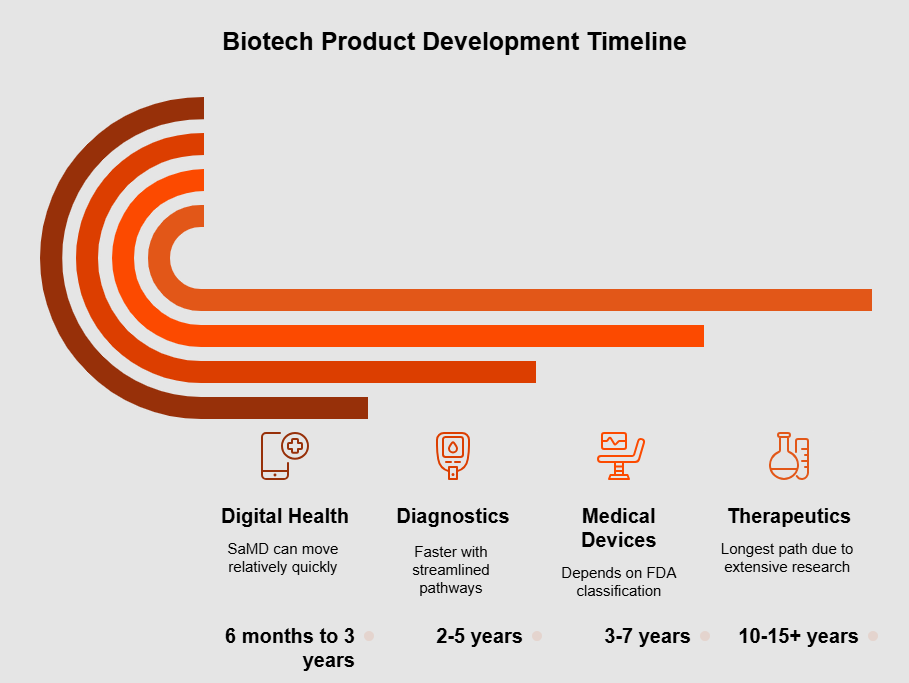
In our experience working with biotech founders, those who succeed understand that the marketing strategy must match both your growth stage and your product development reality.
Understanding Your Journey: The Biotech Valley of Death
Before diving into stage-specific strategies, let's acknowledge the elephant in the room: the notorious "Valley of Death."
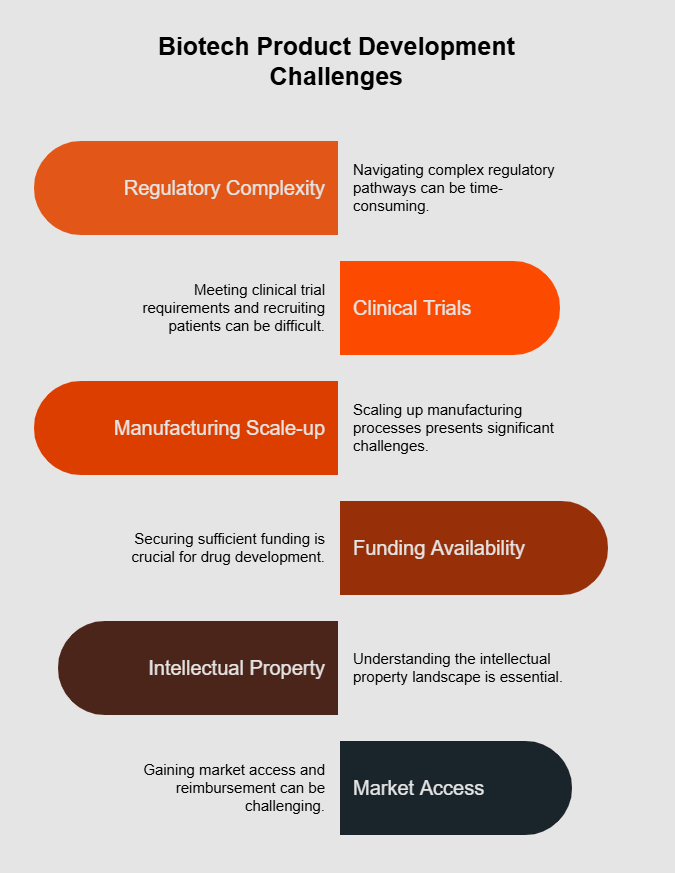
We have seen this play out repeatedly. The valley of death describes that treacherous path from initial discovery to commercialization, where adequate funding dries up, regulatory hurdles multiply, and the immense complexity of the biotech landscape overwhelms even the most promising innovations.
Most biotechs focus their first 2-3 years on de-risking technology and validating market need before committing to the full development timeline. And this is exactly where smart marketing becomes your survival tool, not a luxury expense.
Pre-Seed | How do you build credibility and visibility?
Team size: You, maybe a co-founder, and a handful of believers.
Your marketing mission: Convince smart people to bet on you and your idea.
At this stage, you’re likely working with a concept, maybe some early data, and a team that believes in the mission. No product or demo yet. At this stage, you are the product.
Focus areas:
Tell a story that sticks. Forget jargon-heavy explanations. Frame it like this: "This is the problem that keeps researchers/patients/doctors up at night. Here's why current solutions suck. We got s better way." Keep it conversational.
Build a credible digital presence. You need a clean, professional website that explains your vision, team bios, and a clear mission statement.
Leverage your personal brand. At the pre-seed stage, your personal brand is your business brand. We recommend founders focus 90% of their resources on personal profile content (especially LinkedIn), then use the company page primarily to repost and amplify that personal content.
Show up where it matters. Write LinkedIn posts about industry problems you're solving. Comment thoughtfully on biotech news. Speak at university events or incubator pitch sessions. The goal isn't viral content; it's building recognition with investors and potential partners.
Get early press coverage. Reach out to biotech journalists with your story. Local business journals love "local startup tackles [big problem]" stories.
Seed Stage | How do you demonstrate proof of concept?
Team size: 2-20 people.
Your marketing mission: Show there's real demand and your tech delivers results.
Now you have a prototype, early proof-of-concept data, or maybe first pilot projects. Marketing evolves from “we exist” to “here’s evidence this works.”
This is where biotech startups begin navigating different timelines based on their product type. If you're developing diagnostics, you might be 1-2 years from market. If you're in therapeutics, you're still 8-12 years out, but that doesn't mean marketing matters less. It means your messaging needs to focus on milestones achieved, not product launches.
Focus areas:
Lead with evidence. Share pilot results, early data, or case studies. Even preliminary results matter if they show progress toward your goals. In biotech, "we completed our pre-clinical toxicity studies" is newsworthy at this stage.
Position against the status quo. Don't just explain what you do, explain why it's better than how things work now. "Current approaches require X, Y, and Z. Ours eliminates Y entirely."
Start building your email list. Create valuable content (e.g., research summaries, industry insights, or technical guides) that people want to download. Gate it behind an email signup. This builds your database of interested prospects.
Evolve your social media approach. As you grow from solo founder to a small team, shift your strategy. Focus about 70% on employee-generated content. encourage your scientists and business development team to share their perspectives. Repost employee content on your company page, create 1-2 original posts per week, and start commenting as a company on customers' and partners' content.
Expand your content game. Add a blog or resources section. Share insights about your field, not just your company. This builds authority and helps with SEO.
Series A | How do you scale visibility and demand?
Team size: 20-50 people.
Your marketing mission: Demonstrate market readiness and attract serious investors and partners who can help you grow.
By now, your product or platform works. You've got early customers or strong partnerships andyou need to prove you can grow.
This is where the product development timeline becomes a strategic marketing consideration. Medical device companies might be preparing for commercial launch. Therapeutic companies might be entering Phase II trials. Digital health startups might already be generating revenue. Your marketing sophistication needs to match your market proximity.
Marketing becomes more structured, aimed at generating consistent demand and reinforcing credibility.
Focus areas:
Nail your positioning. By now, you should have a crystal-clear answer to "Why should someone choose you over alternatives?" Test this messaging with customers and refine it.
Become the industry voice. Host webinars, release industry reports, collaborate with key opinion leaders. You're not just participating in conversations, you're starting them.
Launch targeted campaigns. Use LinkedIn ads to reach pharma business development teams. Create personalized outreach sequences for conference attendees. Target specific job titles at companies that fit your ideal customer profile.
Publish serious proof. Detailed case studies, customer testimonials, and application notes that show real-world results. For therapeutics companies, this might be conference presentations or peer-reviewed publications. For device companies, it's early clinical data or user testimonials.
Mature your company presence. With a larger team, your company page now drives brand awareness with distinct content strategies. Create top-of-funnel content (e.g., thought leadership), middle-of-funnel content (e.g., educational resources), and bottom-of-funnel content (e.g., case studies, demos). Run distinct campaigns for talent acquisition, lead generation, and product awareness. Start collaborating with other brands and industry influencers.Your executive team's personal profiles should amplify corporate messages with personal perspectives.
Series B | How do you drive predictable growth?
Team size: 50+ people
Your marketing mission: Drive predictable growth and establish category dominance.
The business model is proven. Now it’s about scaling fast, entering new markets, and building a recognizable brand. For many biotech companies, this is also when commercial launch happens (especially for devices and diagnostics) or when late-stage clinical trials begin showing real commercial promise (therapeutics).
Focus areas:
Performance marketing. Invest in multi-channel campaigns that generate qualified leads at scale. You now have the budget and the data to know what works.
Customer marketing. Your existing customers become your biggest marketing asset. Regular success stories, training resources, and user communities that show prospects what's possible. In biotech, a single case study from a prestigious institution is worth more than a dozen ads.
Global brand consistency. Whether someone discovers you at a conference in Boston or finds you through a Google search in London, they get the same clear message about who you are and what you deliver.
Data-driven optimization. Use analytics to refine campaigns, track ROI; double down on what works and cut what doesn't perform.
Tips to save time at every stage
Create content in batches: spend 2 hours writing 4-5 LinkedIn posts at once and then schedule them throughout the month.
Repurpose everything: turn a conference presentation into 3 blog posts, 5 LinkedIn updates, and an email newsletter.
Partner with industry publications for joint content. They provide distribution; you provide expertise.
Final Thought for Founders, CEOs, and CSOs
From our work with biotech startups across different stages and product types, here's what we know for certain: marketing in biotech isn’t about flashy campaigns. It’s about credibility, visibility, and trust, and these evolve with your stage of growth.
Pre-Seed = Visibility & credibility
Seed = Validation & positioning
Series A = Differentiation & traction
Series B+ = Growth & leadership
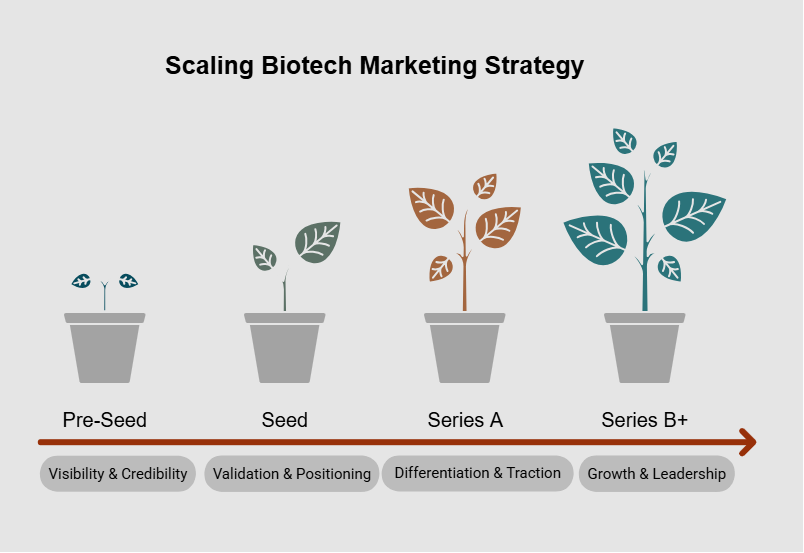
By aligning your marketing strategy with your funding and development stage, you’ll not only attract the right investors and partners, but also build the visibility and credibility that carries you through the valley of death and toward successful commercialization, without breaking the bank with your marketing budget.
The science gets you in the door. Marketing keeps that door open long enough for the science to prove itself.
Where to Go From Here
Building a biotech company is hard enough; your marketing shouldn’t add to the complexity. If you’d like support developing a stage-appropriate marketing strategy that strengthens credibility and accelerates growth, you can explore our marketing strategy framework to see how we help teams navigate this journey more effectively.